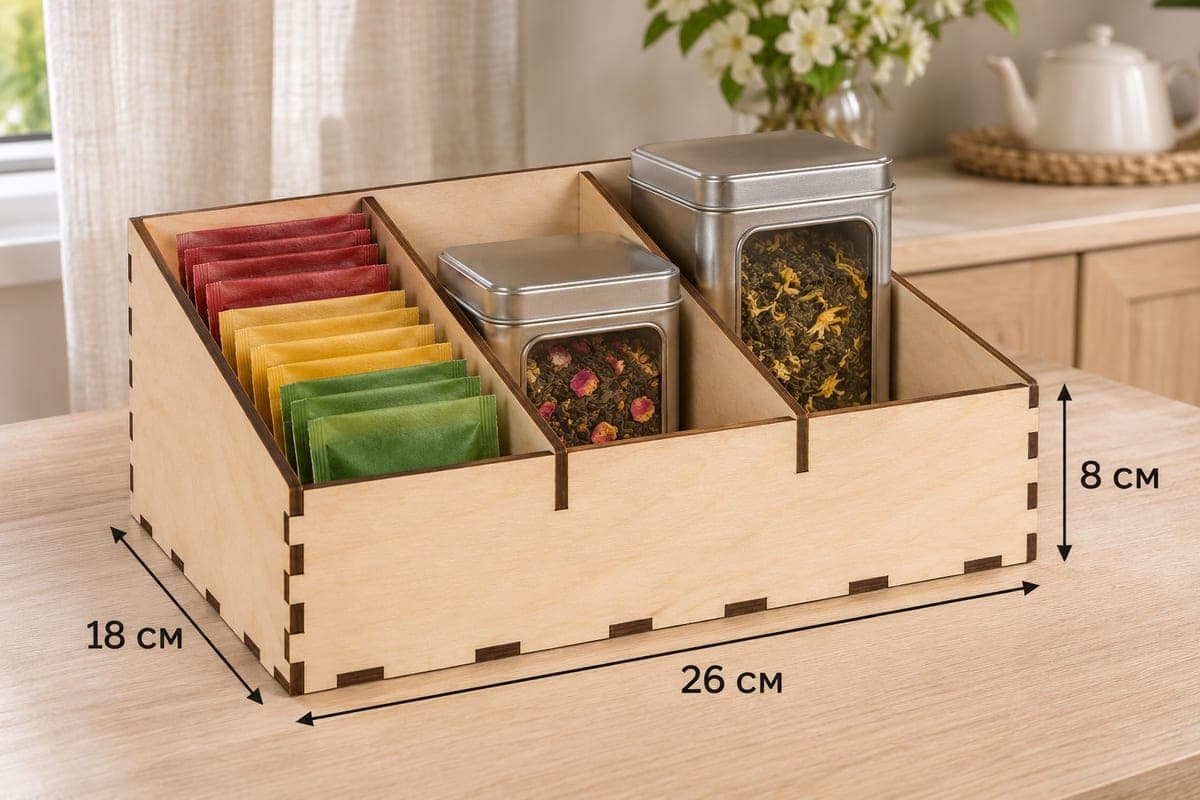
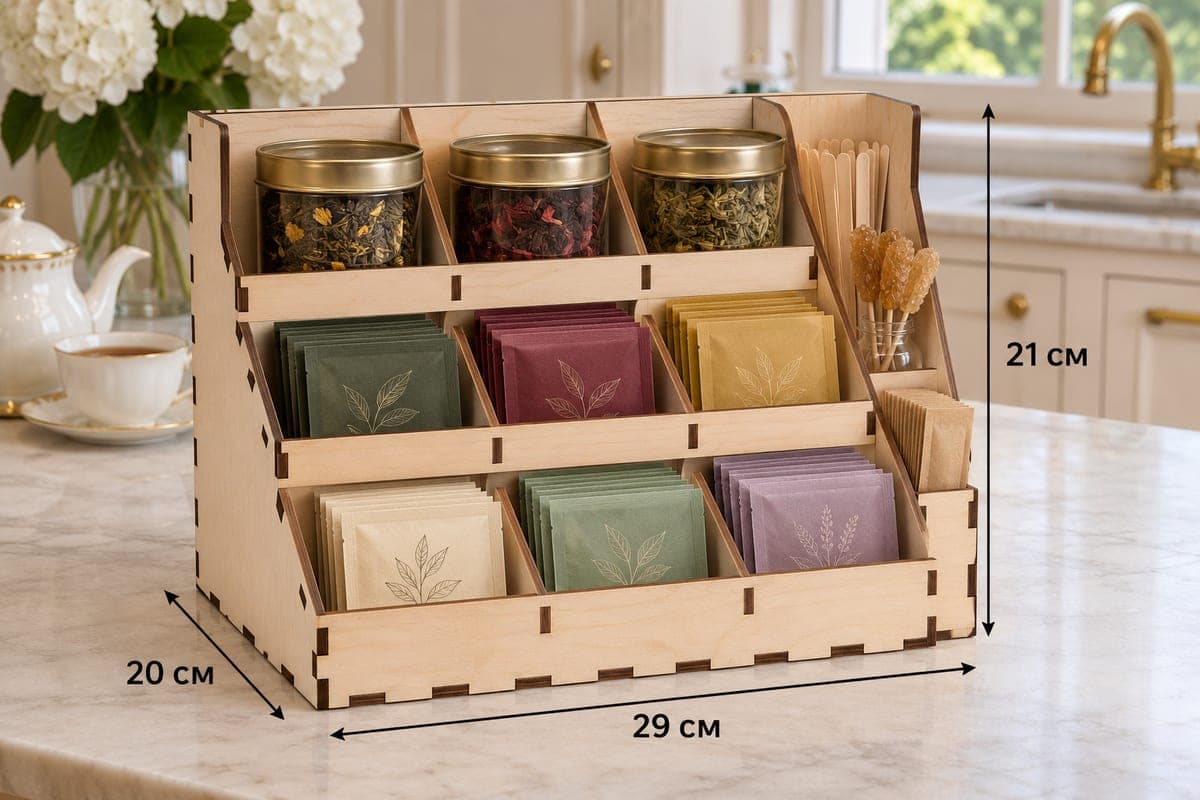
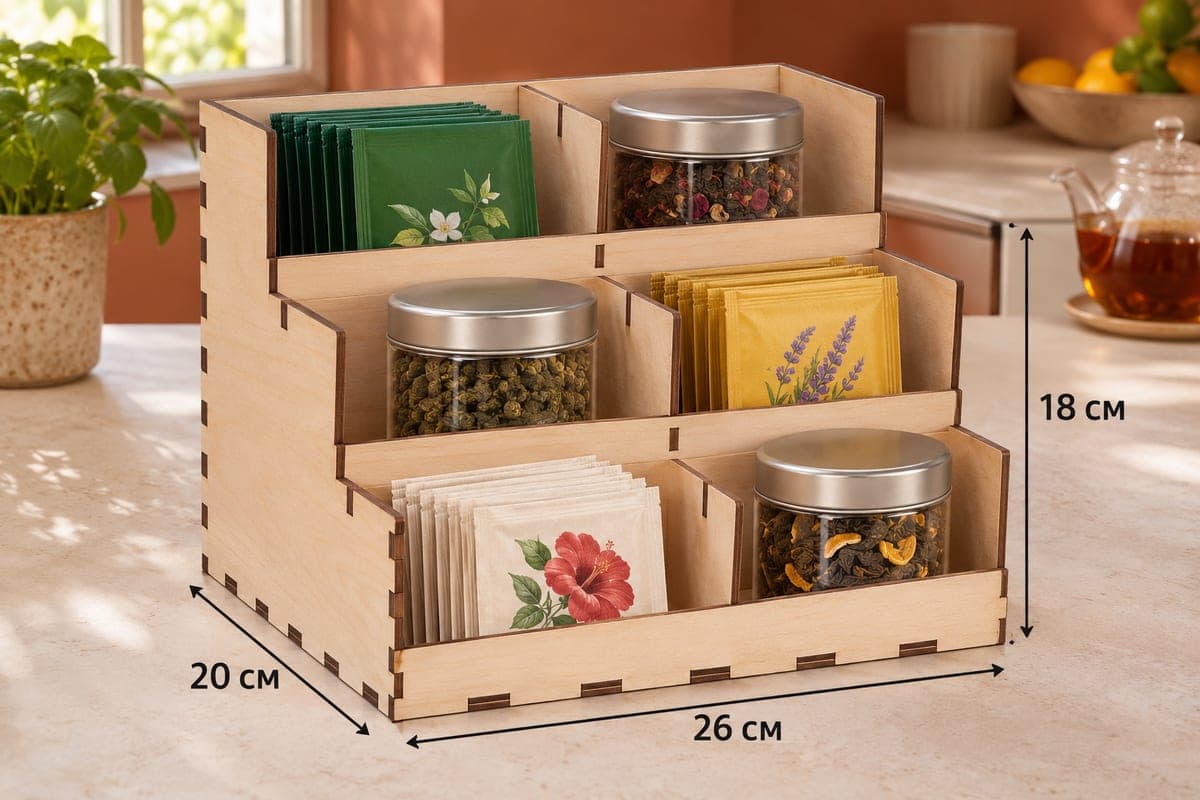
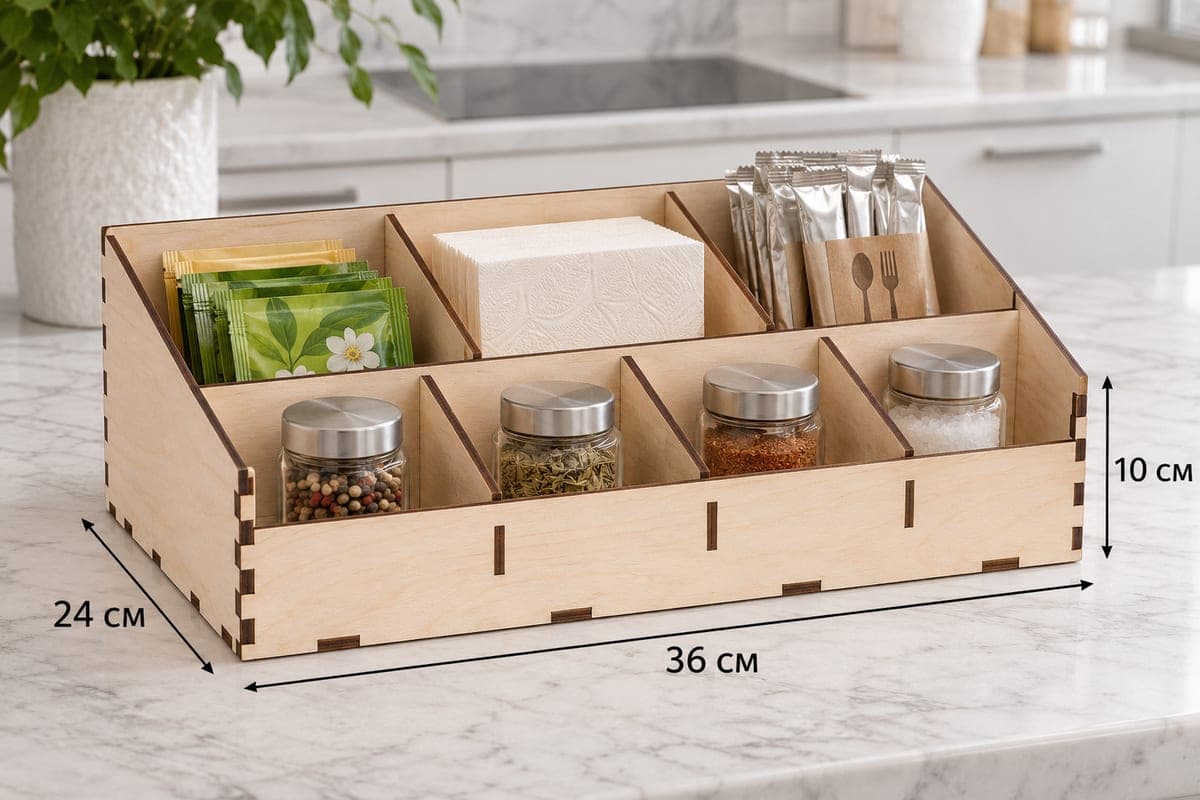
 Visualization
Tea Sampler Tray SVG, Loose Tea and Tea Bag Organizer Laser Cut File, Wooden Tea Tray DXF
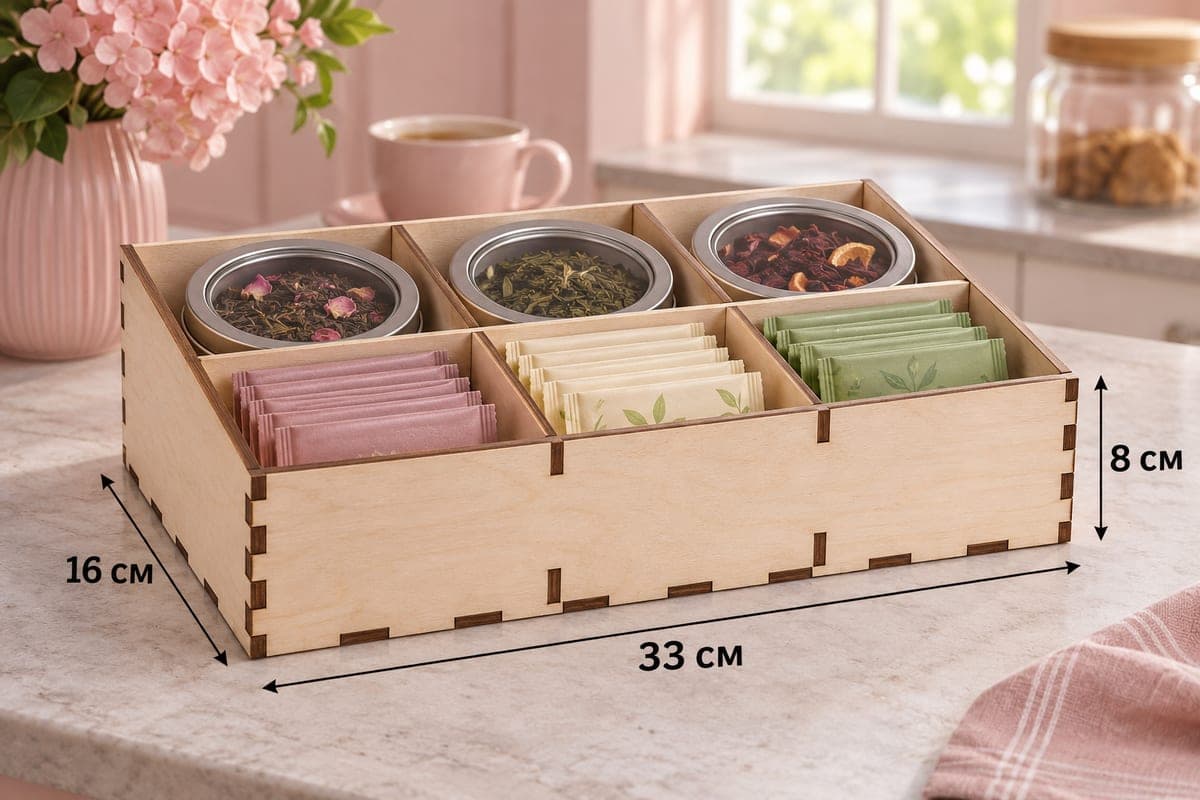
This free laser cut file makes a long, shallow tea sampler tray with six compartments: three at the back for open tins of loose tea and three in a lower front row for tea bags. The tray is 330 × 160 × 80 mm (12.99 × 6.30 × 3.15 in), its front wall is lower with sides sloping down to it, and its 10 plywood pieces fit together with tabs and slots. SVG and DXF files are included for 3, 4, 5 and 6 mm plywood.
- Formats
- SVG, DXF
- Outer size (W × D × H)
- 330 × 160 × 80 mm (12.99 × 6.30 × 3.15 in)
- Parts
- 10
- Material thickness
- 3, 4, 5 or 6 mm plywood (a file for each)
- Layout size (3 mm file)
- 1,334 × 252 mm
- Cut length
- 6.36 m
- Est. time, 10 W diode (3 mm)
- 21 min 13 s
- Est. time, 40 W CO2 (3 mm)
- 8 min 50 s
- Layers
- CUT only, no engraving
Free account required to download
How to make it
- 01Choose the file for your plywood thickness and cut one short divider with a matching slot to test the fit.
- 02Split the 1334 mm layout over two sheets if needed and cut all ten pieces.
- 03Set the base down, raise the back and the two sloped sides, close it with the low front, then push in the cross divider and the four short dividers.
- 04Sand any scorched edges, seal with lacquer or oil, and fill the back cells with tins and the front cells with tea bags.
A tasting flight in one tray
With three cells in each row, the tray works like a tasting board: three loose teas at the back, three matching bagged teas in front. The photo shows open tins of rose petal, green and fruit tea behind pink, cream and green tea bags, set out on a marble counter. At 80 mm high at the back and only 48 mm at the front, it is a low tray that slides onto a shelf under a cabinet or into a deep drawer and still shows every flavour from above. The 330 mm length takes six varieties without crowding.
Laser settings and sheet size
The ten pieces are front, back, two sloped sides, base, one long cross divider and four short dividers, two at full height for the back row and two shorter ones for the front. Cutting time for the 3 mm file is about 21 min 13 s on a 10 W diode, about 8 min 50 s on a 40 W CO2 and about 4 min 15 s on a 100 W CO2. The layout runs 1334 × 252 mm, longer than most hobby beds, so plan to split it: base and back on one sheet, the rest on another. A diode handles 3 mm in one or two passes; for 5 or 6 mm use more passes or a CO2 machine.
Selling and gifting
Tea sampler trays sell well as a bundle: cut the tray, fill it with six small packs from a local tea shop and wrap it in cellophane. Cafes can put one on the counter as a self-serve tea station, with their logo engraved on the front wall. A coat of clear lacquer protects the plywood from drips. Glue is not needed for the slot joints, but a few drops make the tray rigid enough for daily handling.
Questions about this file
Do standard tea bag envelopes stand up in the front cells?
Yes, they stand on edge, and because the front wall is only 48 mm tall most of each envelope stays visible.
Could I resize the tray to fit my drawer?
Stretch the length or depth of the panels in your editor, but keep the slots and tabs at your material thickness. Scaling the whole drawing by a percentage changes the slot width and the parts will no longer lock together.
Which thickness looks best for a tray this low?
3 or 4 mm keeps the walls slim and the cells roomy. 6 mm is noticeably chunkier and takes a little space from each cell.
Is acrylic an option for a tea tray on a cafe counter?
Acrylic of the matching thickness cuts well on a CO2 laser and gives a clean retail look. Most diode lasers cannot cut clear acrylic.
How do I keep tea fresh in the open cells?
The tray is open on top, so keep loose tea in closed tins and bags in their sealed envelopes. The tray simply keeps them in order.
Similar files