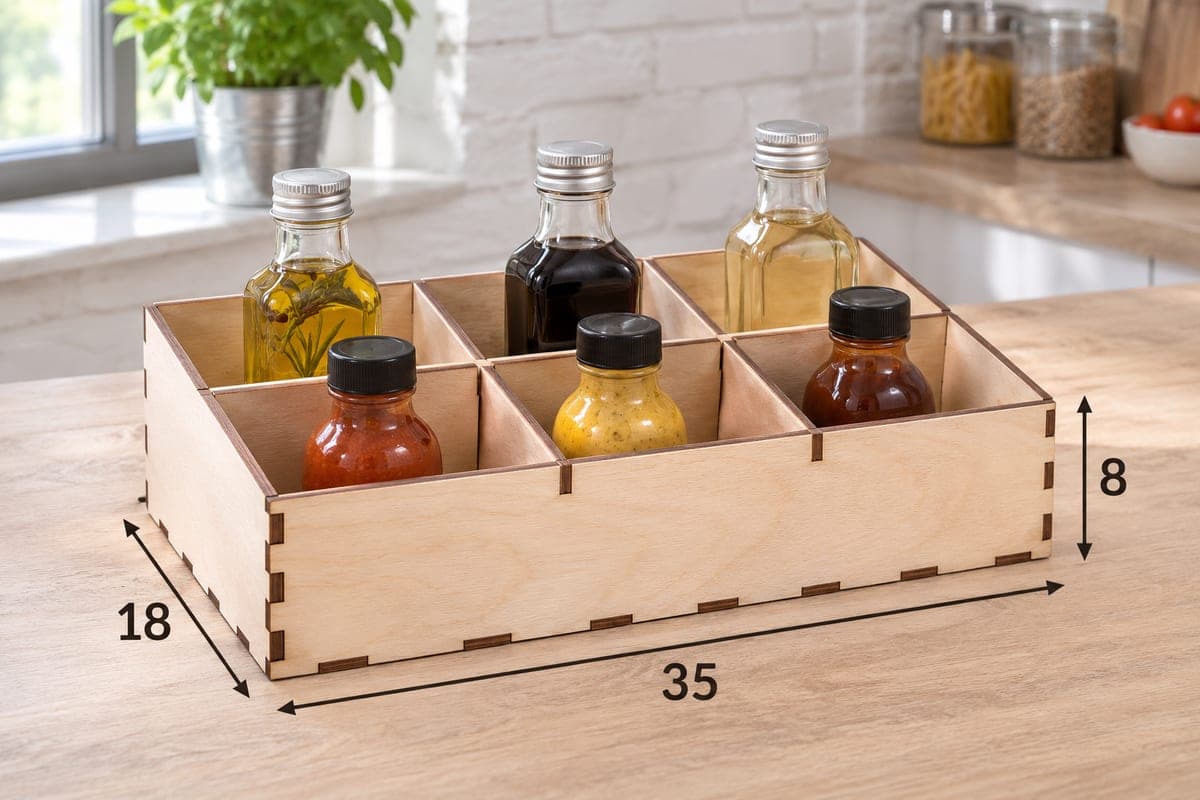
 Visualization
Condiment Box SVG, Six Cell Sauce Bottle Crate Laser Cut File, Wooden Grid Organizer DXF
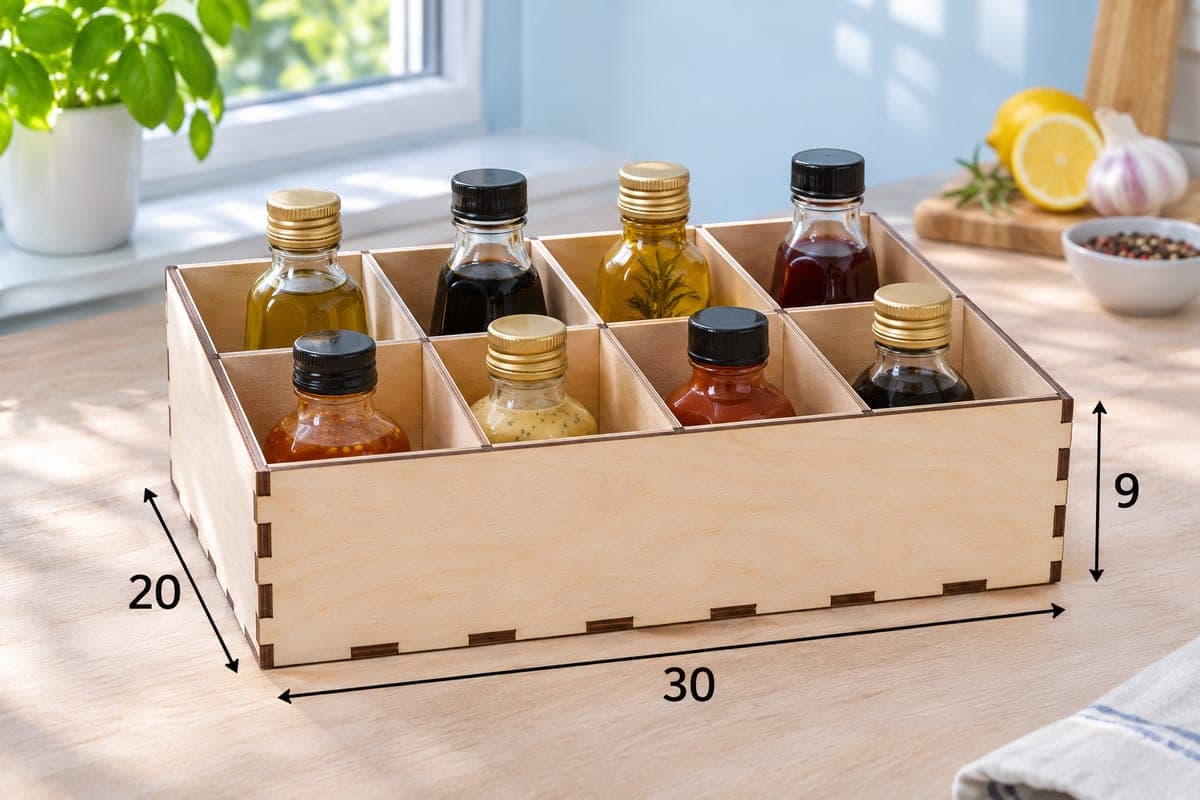
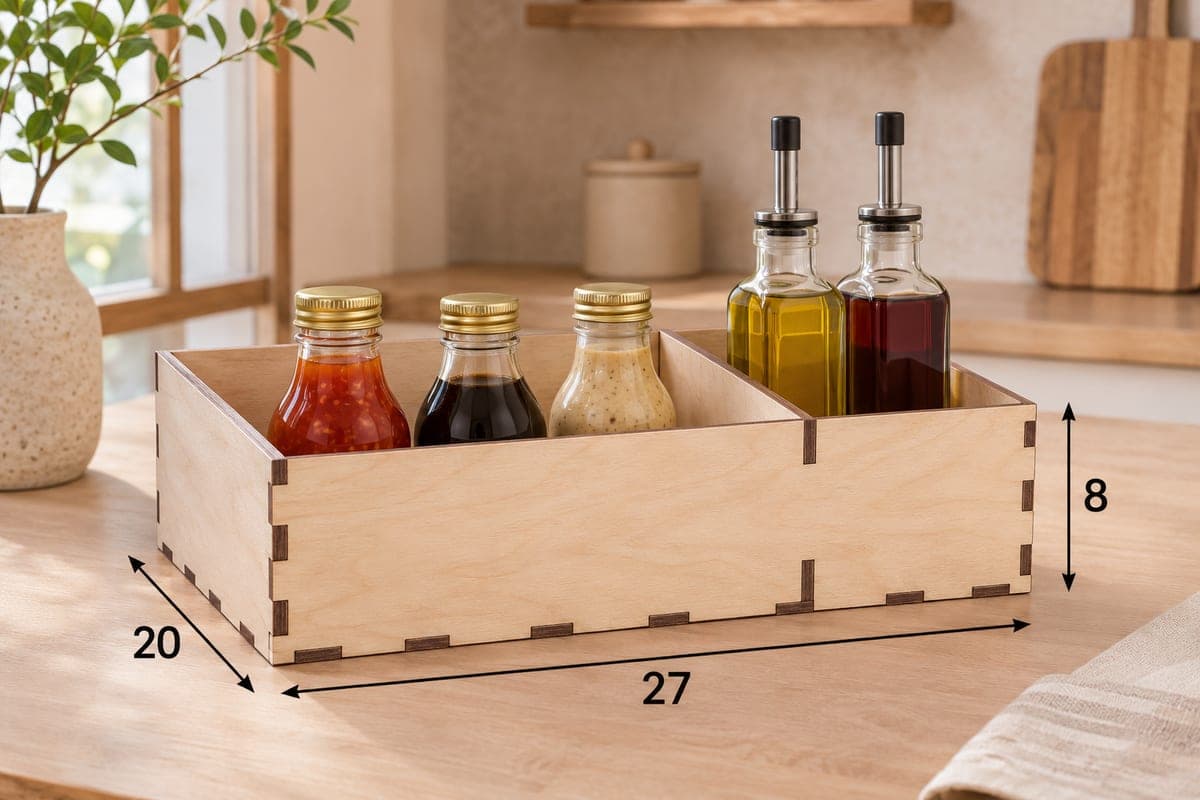
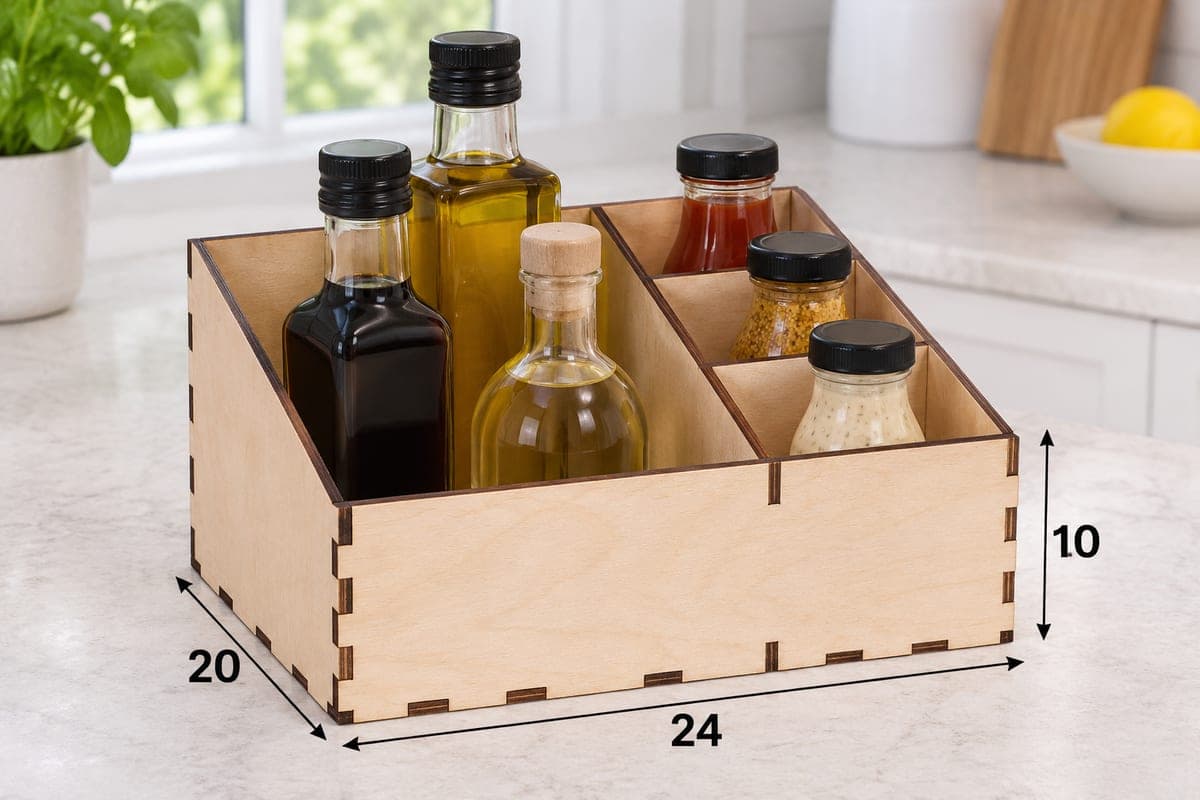
An open condiment box with straight 80 mm walls and six equal cells in a three by two grid, made for sauce, oil and vinegar bottles. It is a free download with SVG and DXF files for 3, 4, 5 and 6 mm plywood, measures 350 × 180 × 80 mm (13.78 × 7.09 × 3.15 in), and goes together from 8 pieces with tabs and slots; the dividers slot into each other.
- Formats
- SVG, DXF
- Outer size (W × D × H)
- 350 × 180 × 80 mm (13.78 × 7.09 × 3.15 in)
- Parts
- 8
- Material thickness
- 3, 4, 5 or 6 mm plywood (a file for each)
- Layout size (3 mm file)
- 1,080 × 272 mm
- Cut length
- 8.44 m
- Est. time, 10 W diode (3 mm)
- 28 min 08 s
- Est. time, 40 W CO2 (3 mm)
- 11 min 43 s
- Layers
- CUT only, no engraving
Free account required to download
How to make it
- 01Pick the file for your plywood thickness and test-cut one short divider to see that it slides onto the long divider without play.
- 02Cut the eight pieces from the 1080 × 272 mm layout, splitting it once if your bed is shorter.
- 03Assemble base, front, back and sides, then lock the two short dividers onto the long one and drop the grid into the box.
- 04Sand, seal, and set three tall bottles in the back cells and three sauces in front.
A simple grid that holds bottles upright
Three dividers make the whole grid: one long divider running the 350 mm length and two short ones crossing it from front to back. They slot into each other and form an even grid of six cells, three at the back and three at the front. Every wall and divider is the same 80 mm height, which gives each bottle the same support on all four sides.
In the photo the back cells hold an herb oil, a dark vinegar and a pale vinegar with screw caps, and the front cells hold chilli sauce, a grainy mustard and a brown barbecue sauce. With 180 mm of depth split in two, each cell is close to square, so round and square bottles both sit straight.
Cutting and assembly
The pieces fit a 1080 × 272 mm layout, a comfortable size for a large-bed CO2 that needs only one split on a smaller machine. The 3 mm file takes about 28 min 08 s on a 10 W diode or about 11 min 43 s on a 40 W CO2. A diode user cutting 5 or 6 mm plywood should plan several passes, or pick 3 or 4 mm.
Build the outer shell first: base, front, back and the two sides. Then slot the two short dividers onto the long one and lower the finished grid into the box. The dry fit is firm; add glue only along the base if the box will be carried around full.
Finishing and gift ideas
Sand the top edges where hands reach in, then seal with a clear lacquer or mineral oil. Filled with six homemade sauces or flavoured oils it becomes a ready gift crate; empty, it sells well next to a matching spice box at a craft fair. Engrave a name across the front for a personal touch, or a small logo if you supply a local deli.
Questions about this file
How big is each cell?
In the 3 mm version each cell is a little over 110 mm wide and about 85 mm deep, so bottles up to about 80 mm across fit easily.
Can the dividers be left out?
Yes, the box stands on its own walls, so you can skip the grid and use it as an open crate for bigger jars.
Why not just scale it up for wine bottles?
Scaling resizes every slot, and the slots have to match your plywood thickness. For a taller crate, raise the walls and dividers in a vector editor and leave the joints unchanged.
Is MDF a good alternative?
MDF cuts cleanly and paints well, but it swells if it gets wet, so seal it thoroughly for kitchen use. Birch plywood copes with spills better.
Which thickness looks best?
4 mm gives the grid a solid feel without making the cells much smaller; 3 mm is lighter and faster on a diode laser.
Similar files