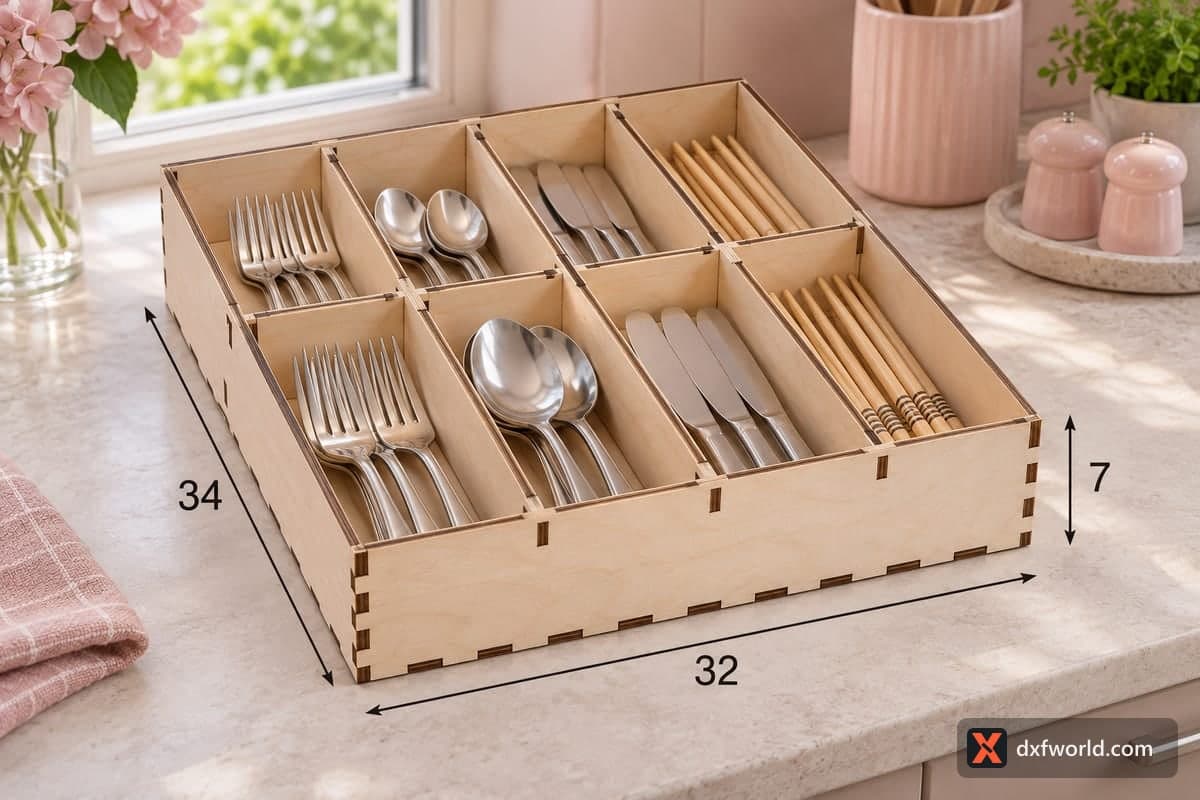
 Visualization
Eight Cell Cutlery Grid Box SVG, Four by Two Silverware Sorter Laser Cut File, Egg Crate Divider Utensil Box DXF
A free laser cut file for an open cutlery box, 320 × 340 × 70 mm (12.60 × 13.39 × 2.76 in) outside, with eight compartments in a grid of four columns and two rows. Three long dividers and one cross divider interlock egg-crate style. The download includes SVG and DXF for 3, 4, 5 and 6 mm plywood, and the 9 pieces assemble with tabs and slots.
- Formats
- SVG, DXF
- Outer size (W × D × H)
- 320 × 340 × 70 mm (12.60 × 13.39 × 2.76 in)
- Parts
- 9
- Material thickness
- 3, 4, 5 or 6 mm plywood (a file for each)
- Layout size (3 mm file)
- 1,360 × 496 mm
- Cut length
- 11.62 m
- Est. time, 10 W diode (3 mm)
- 38 min 43 s
- Est. time, 40 W CO2 (3 mm)
- 16 min 08 s
- Layers
- CUT only, no engraving
Free account required to download
How to make it
- 01Choose the SVG or DXF for your plywood and test-fit one halving joint of the grid on scrap; it should slide together with light hand pressure.
- 02Cut the 9 parts, spreading the 1360 × 496 mm layout over about three sheets.
- 03Join the front, back and two sides to the base, then interlock the cross divider with the three long dividers and drop the finished grid into the box.
- 04Sand the top edges of the grid, oil everything and fill each column with one type of cutlery, front and back.
A grid of eight cells
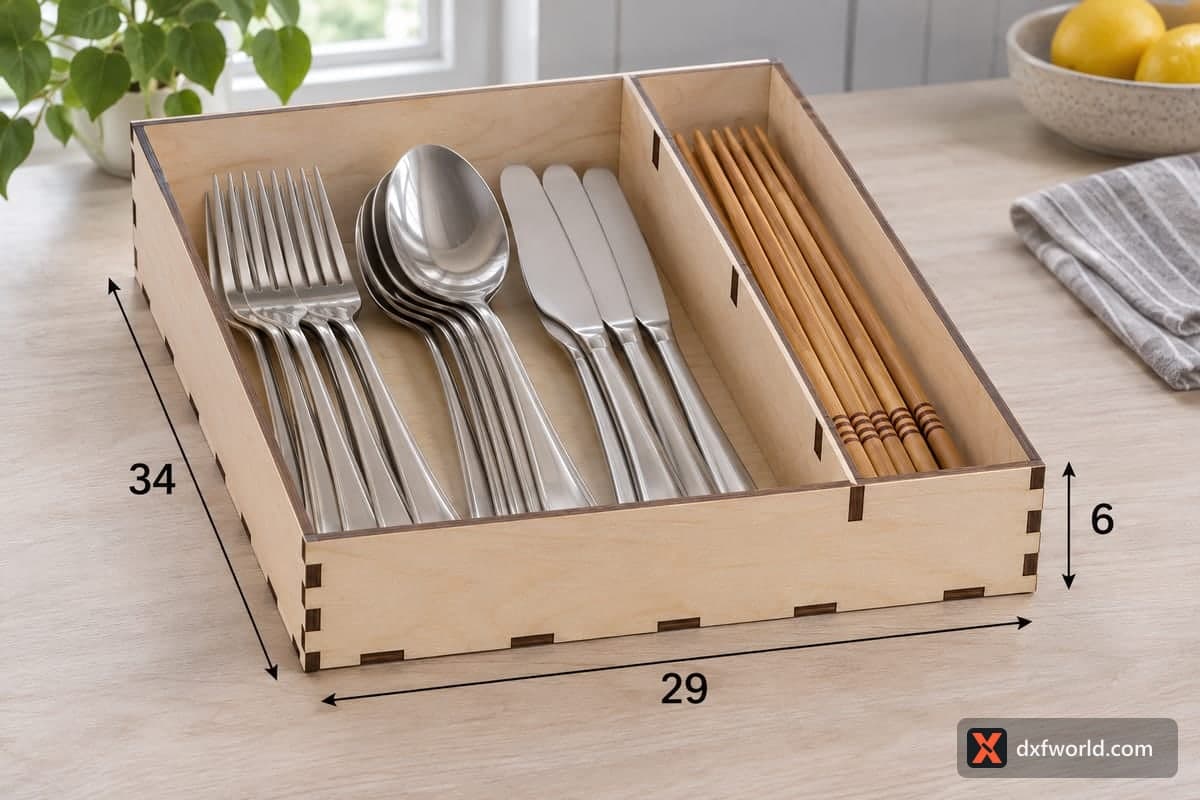
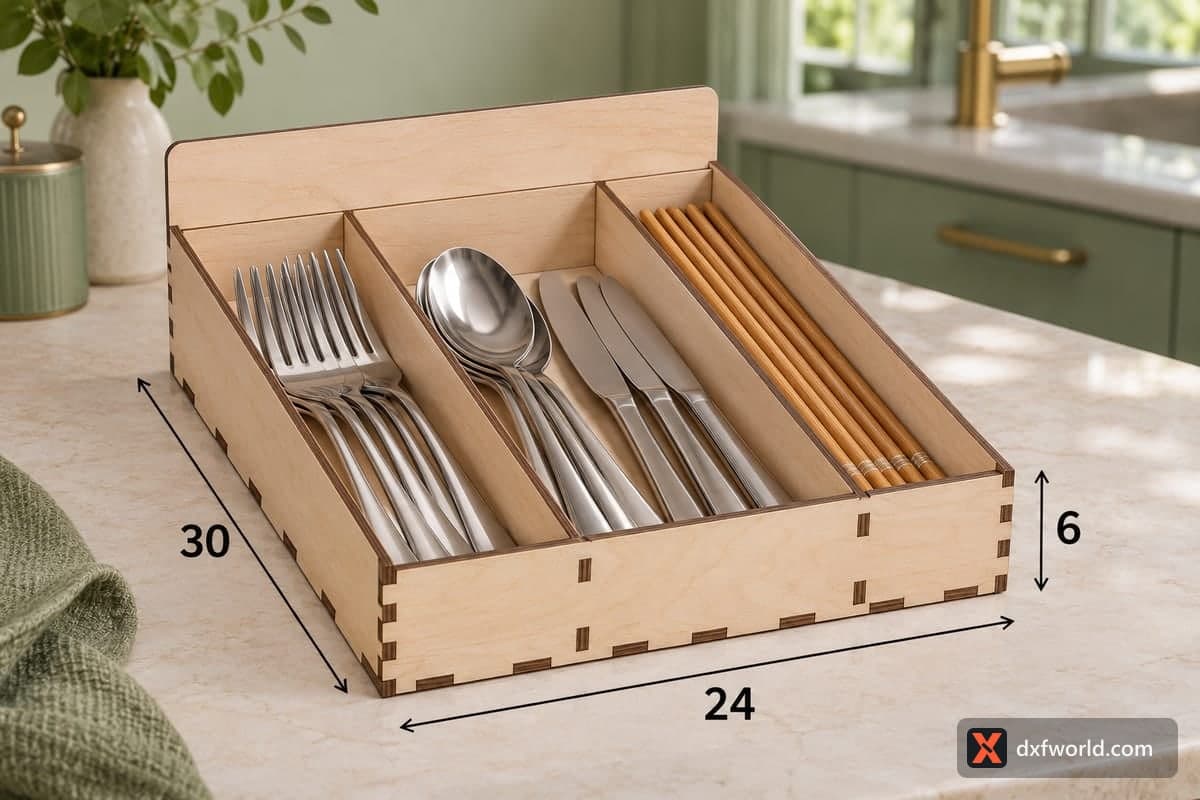
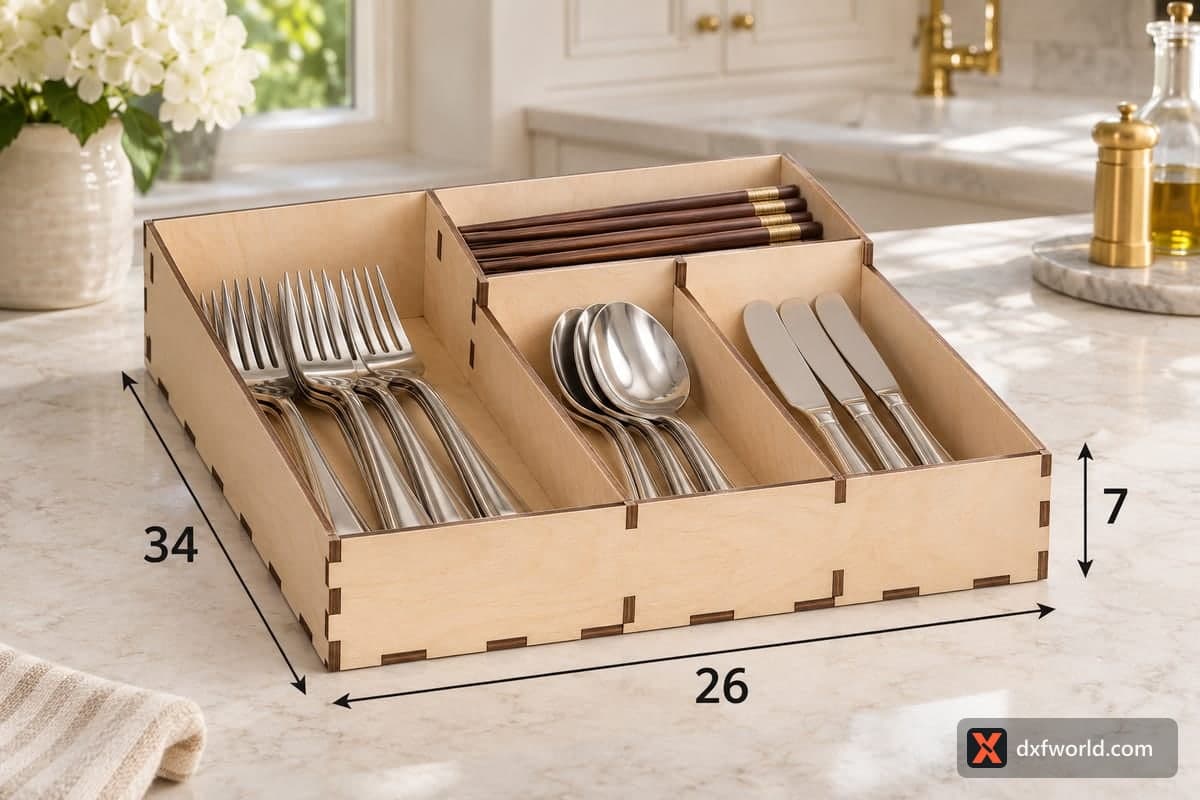
Three full-height dividers run front to back and one cross divider runs side to side; they slot into each other halfway and lock into a rigid grid. That leaves eight cells about 7.5 cm wide and 16.5 cm deep, four in each row, all 70 mm tall. In the photo each column holds one type: forks, spoons, knives and chopsticks, repeated in the front and back rows.
Two cells per type opens up a few ways to sort. Keep everyday cutlery in front and the guest set behind, or split dinner and dessert sizes, or give each of two people sharing a flat their own row. Dessert pieces lie flat in a 16.5 cm cell; dinner knives and forks rest at a slight tilt with the handles raised against the cross divider.
Drawer fit
As a drawer insert it needs a floor of at least 320 × 340 mm and more than 70 mm of clear height. On a shallow drawer, check the height first, because every wall and divider is the full 70 mm.
Cutting and assembly tips
The 3 mm file runs about 38 min 43 s on a 10 W diode, about 16 min 08 s on a 40 W CO2 and about 7 min 45 s on a 100 W CO2. The layout is 1360 × 496 mm, so plan three sheets on a typical hobby bed. Build the outer box first, then push the grid in as one unit: interlock the cross divider with the three long ones on the bench, then lower it into the base slots. No glue is needed for the grid, which makes it easy to lift out and wipe the cells. Finish with oil or a water-based lacquer.
Sells well as a drawer upgrade for new homeowners or as a matching set with a utensil tray of the same depth.
Questions about this file
How big is each cell?
About 7.5 cm wide and 16.5 cm deep, with 70 mm high walls. Dessert cutlery lies flat; full dinner pieces sit slightly tilted.
Can the grid be taken out for cleaning?
Yes, if you leave it unglued. The four dividers lift out together as one interlocked unit.
Can I use it for something other than cutlery?
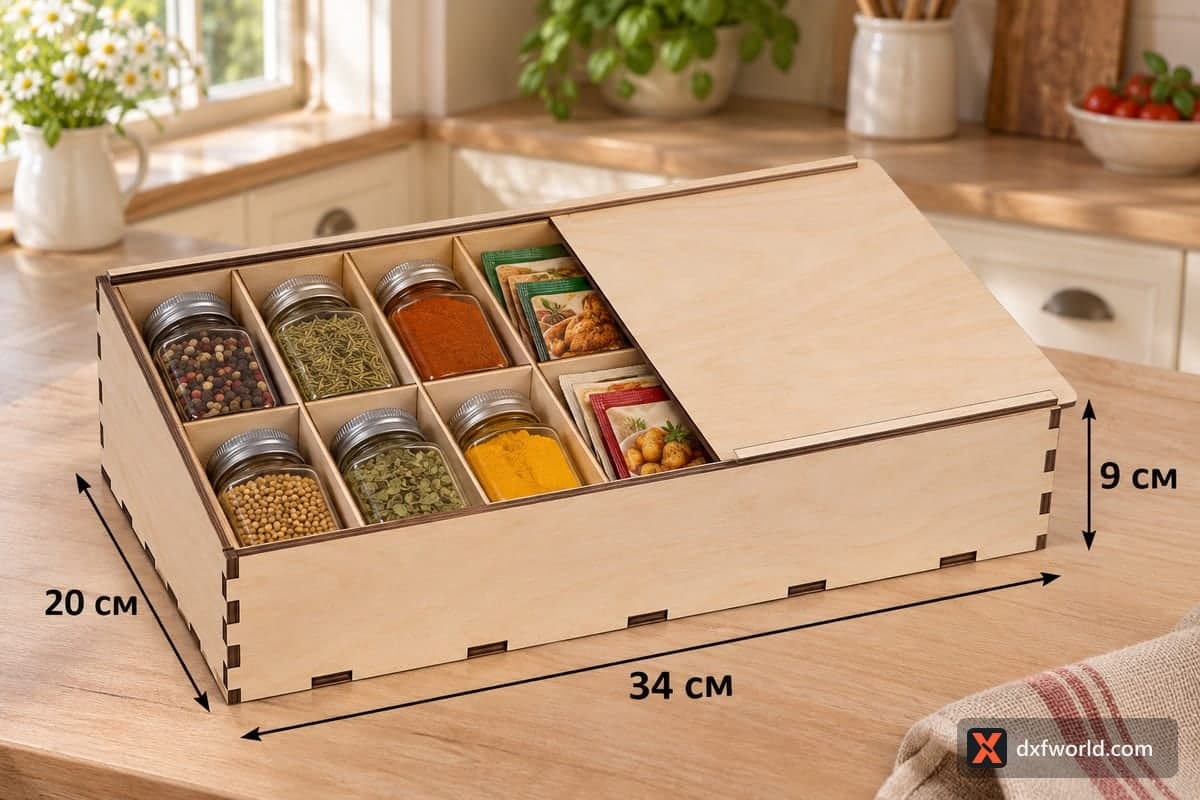
It makes a good sorter for spice sachets, tea bags, baking tools or craft supplies. Any small items that like their own cell will do.
Which thickness suits a heavy everyday set?
4 or 5 mm gives stiffer dividers that stay straight under a full load of stainless cutlery. 3 mm is enough for lighter use.
Can I make the cells wider?
Leave out one long divider to get six cells instead of eight. The empty slots in the front and back walls can be filled with wood filler.
Similar files