 Visualization
Beaded Vase SVG, Slot Together Rib Vase Laser Cut File, Decorative Wooden Vase DXF, Bead Covered Flower Vase
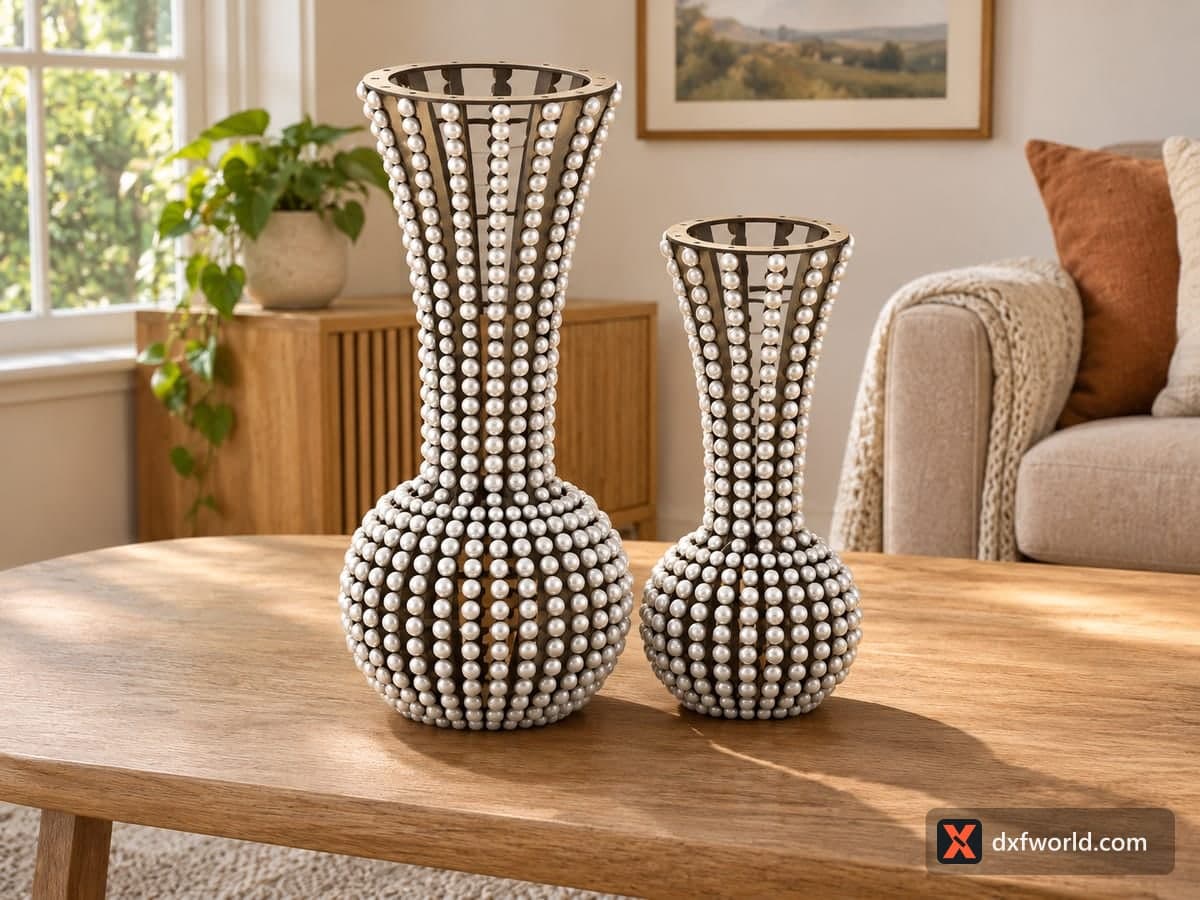
A slot-together decorative vase with a round belly and a tall flared neck, built from notched ribs held by a rim ring and a base ring, then covered in small round bead discs. You get the frame and the beads free in two formats, SVG and DXF, on a 679 × 394.7 mm (26.73 × 15.54 in) layout of cut lines.
- Formats
- SVG, DXF
- Size
- 679 × 395 mm (26.73 × 15.54 in)
- Material
- Plywood, MDF, acrylic or metal (scale to your piece)
- Cut length
- 40.50 m
- Est. time, 10 W diode (3 mm)
- 135 min 00 s
- Est. time, 40 W CO2 (3 mm)
- 56 min 15 s
- Layers
- CUT only, no engraving
Free account required to download
How to make it
- 01Read the tooth gap on a rib in your software, buy sheet of that thickness and test one rib with three beads.
- 02Cut the frame parts, then run the bead section on its own with air assist and collect every disc.
- 03Stand the ribs between the base ring and the toothed rim ring, then press the beads into the gaps row by row.
- 04Spray the beads pearl white or metallic, fix any loose ones with glue and fill the vase with dried stems.
What the parts are
The left half of the layout holds the frame. There are three rib shapes: short curved ribs for the round belly, long gently bent ribs for the neck and curved ribs for the flare at the top. Every rib has a row of small square teeth along its edges. Below them sit the base disc, a flat base ring, a separate toothed ring for the rim and several loose arc segments. The right half is packed with hundreds of tiny round bead discs, each with a narrow slot through the middle, and they sit between the rib teeth to cover the whole frame, the way the photo shows them in pearl white.
Cutting tips
The beads are the slow part. Cut them on a separate run with air assist on and a honeycomb or pin bed, because small parts drop through slats or tip into the beam. Count a handful after the run to make sure each one came free. No material thickness is written on the drawing. Check the gap between two rib teeth on screen; that gap is your sheet thickness, and if no plywood you own fits, resize the layout until a sheet does. Test with one rib and three beads before the full run.
Finishing and display
Paint the beads before assembly: a pearl or metallic spray copies the pictured vases, while bare birch beads on a dark stained frame read as rustic. The vase is a dry decoration, so fill it with dried grass, pampas or paper flowers rather than water. A pair in two heights makes a good mantel or wedding table set.
Questions about this file
Can the vase hold water?
No, the frame is open between the ribs. Put a glass or plastic liner inside if you want fresh flowers, or keep it for dried stems.
How do the beads stay in place?
Each disc sits in a gap between two teeth on a rib. If your sheet is slightly thin, a dot of glue on each bead keeps them from rattling loose.
Can I make a smaller vase like the second one in the photo?
Scale the whole file down and use thinner material that matches the smaller slot gaps, or the teeth will not grip the beads.
Is acrylic a good choice for the beads?
White or pearl acrylic beads save the painting step. Keep the ribs in plywood, which is less brittle at the small teeth.
Why do some beads go missing after cutting?
Tiny parts fall between slats or flip up. Use a pin or honeycomb bed and lower the air assist a little for the bead run.
Similar files