 Visualization
Hinged Box with Compartments SVG, Olive Oil Tasting Chest Laser Cut File, Wooden Condiment Storage DXF
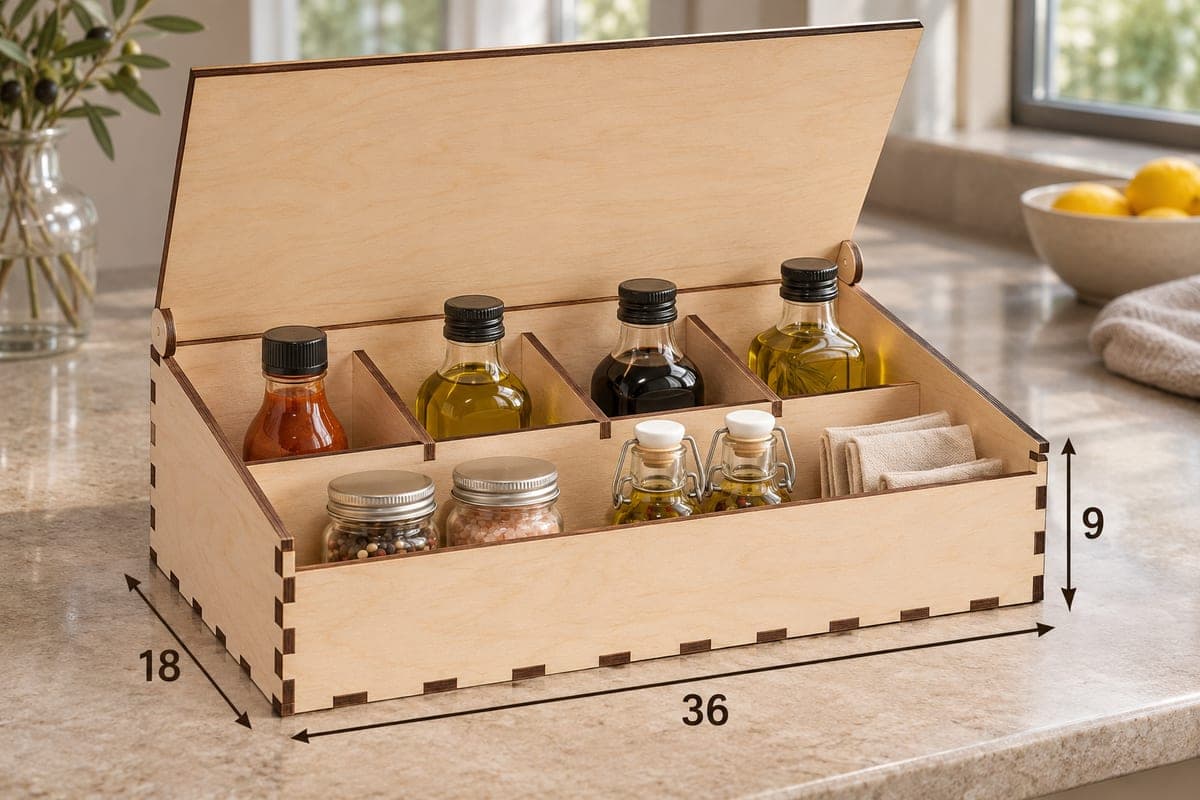
This free laser cut file builds a large wooden condiment chest with eight sections in two rows of four and a lid that pivots open at the back on pins cut into the plywood. It comes as SVG and DXF with separate versions for 3, 4, 5 and 6 mm plywood, and its 10 pieces join with tabs and slots into a 360 × 180 × 90 mm (14.17 × 7.09 × 3.54 in) chest for oils, salts, peppers and napkins.
- Formats
- SVG, DXF
- Outer size (W × D × H)
- 360 × 180 × 90 mm (14.17 × 7.09 × 3.54 in)
- Parts
- 10
- Material thickness
- 3, 4, 5 or 6 mm plywood (a file for each)
- Layout size (3 mm file)
- 1,284 × 467 mm
- Cut length
- 10.20 m
- Est. time, 10 W diode (3 mm)
- 34 min 00 s
- Est. time, 40 W CO2 (3 mm)
- 14 min 10 s
- Layers
- CUT only, no engraving
Free account required to download
How to make it
- 01Pick the thickness that matches your plywood and cut a side panel corner on scrap to see that the lid pivot moves freely.
- 02Cut the 10 parts over three sheets: base, lid, then walls and dividers together.
- 03Assemble base, front and back, interlock the three short dividers with the long one, then capture the lid between the two sides as you press them on.
- 04Ease the pins if the lid drags, seal the chest with food-safe oil and arrange bottles behind and jars and napkins in front.
A full table set in one chest
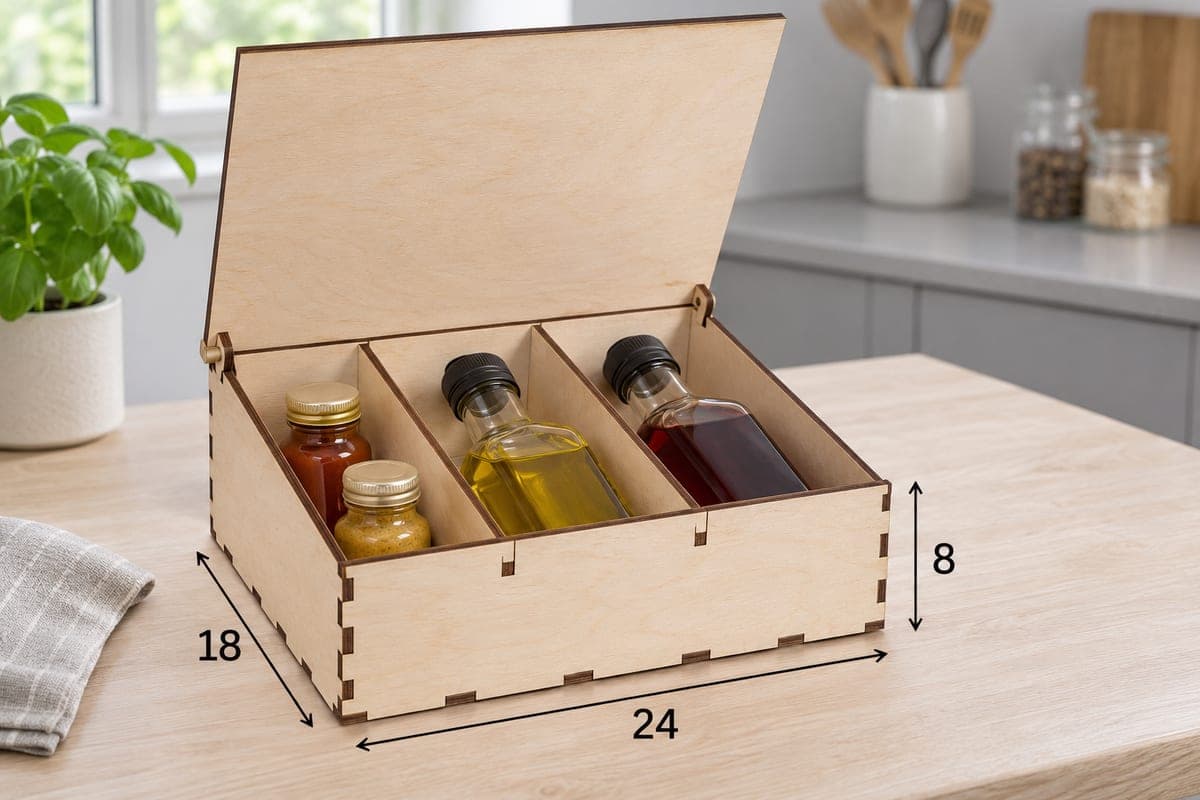
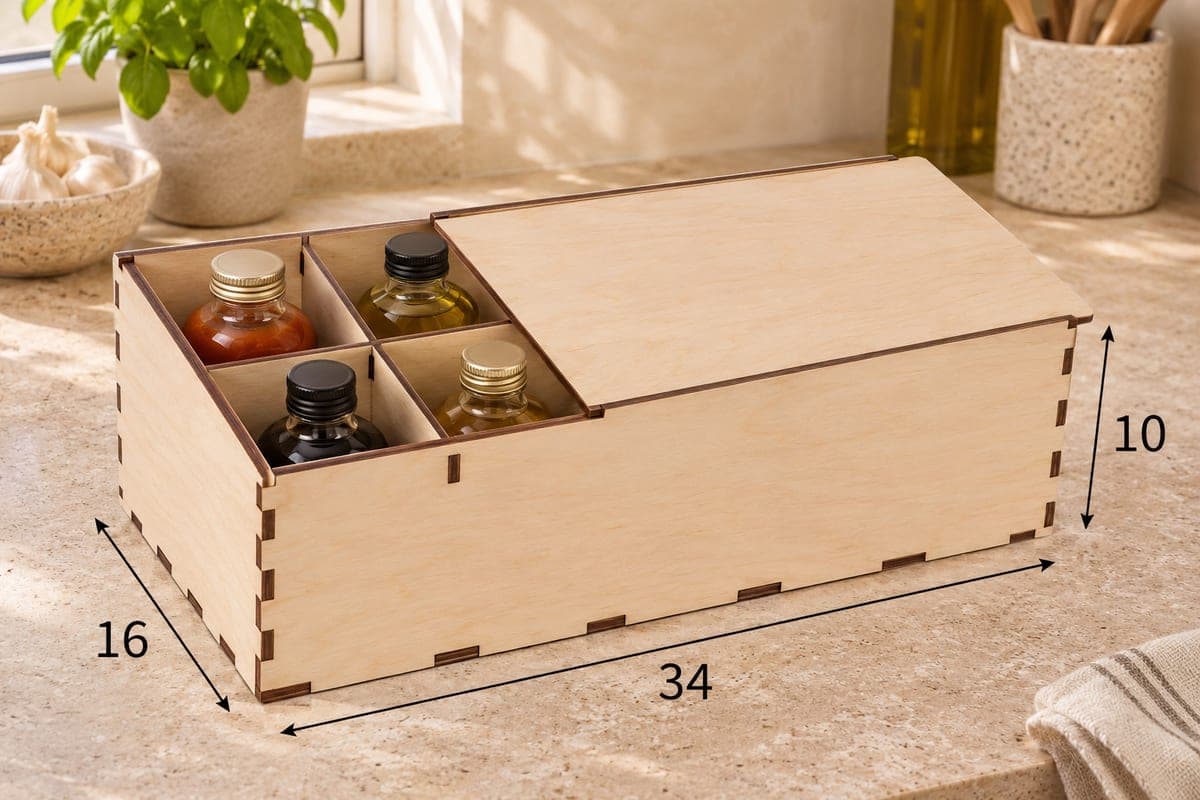
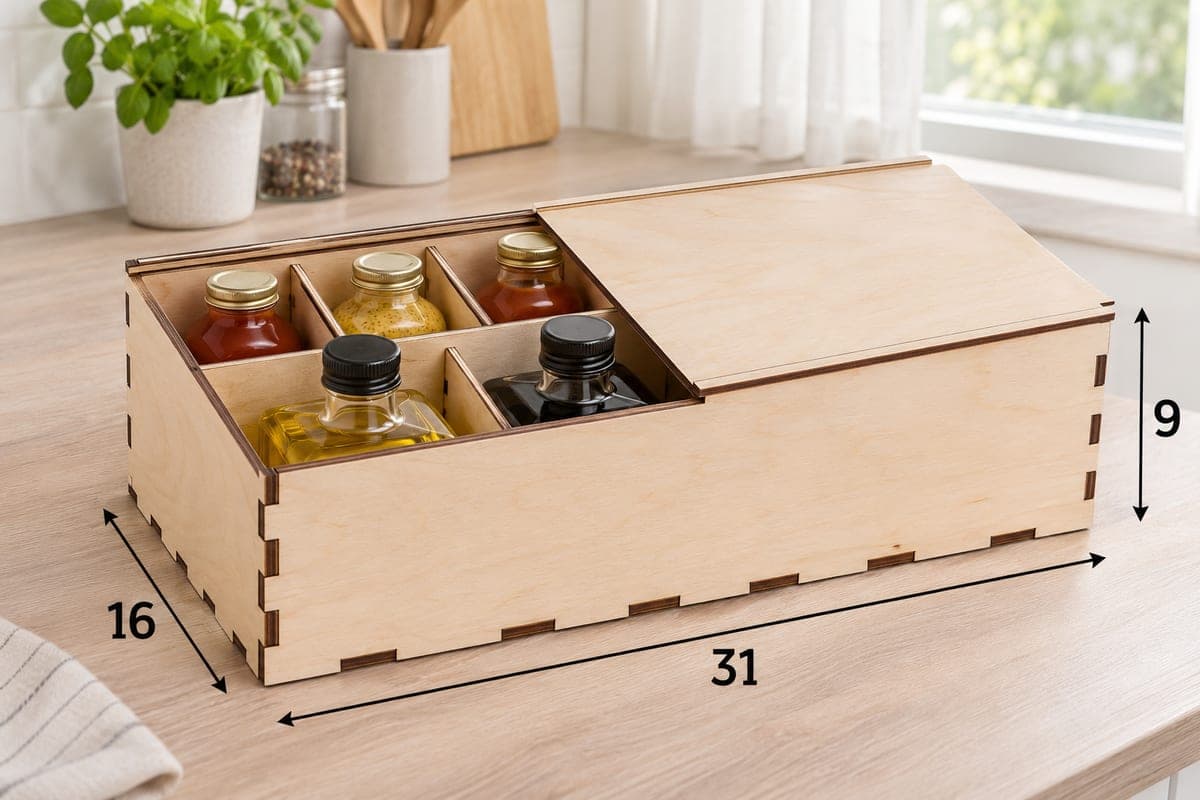
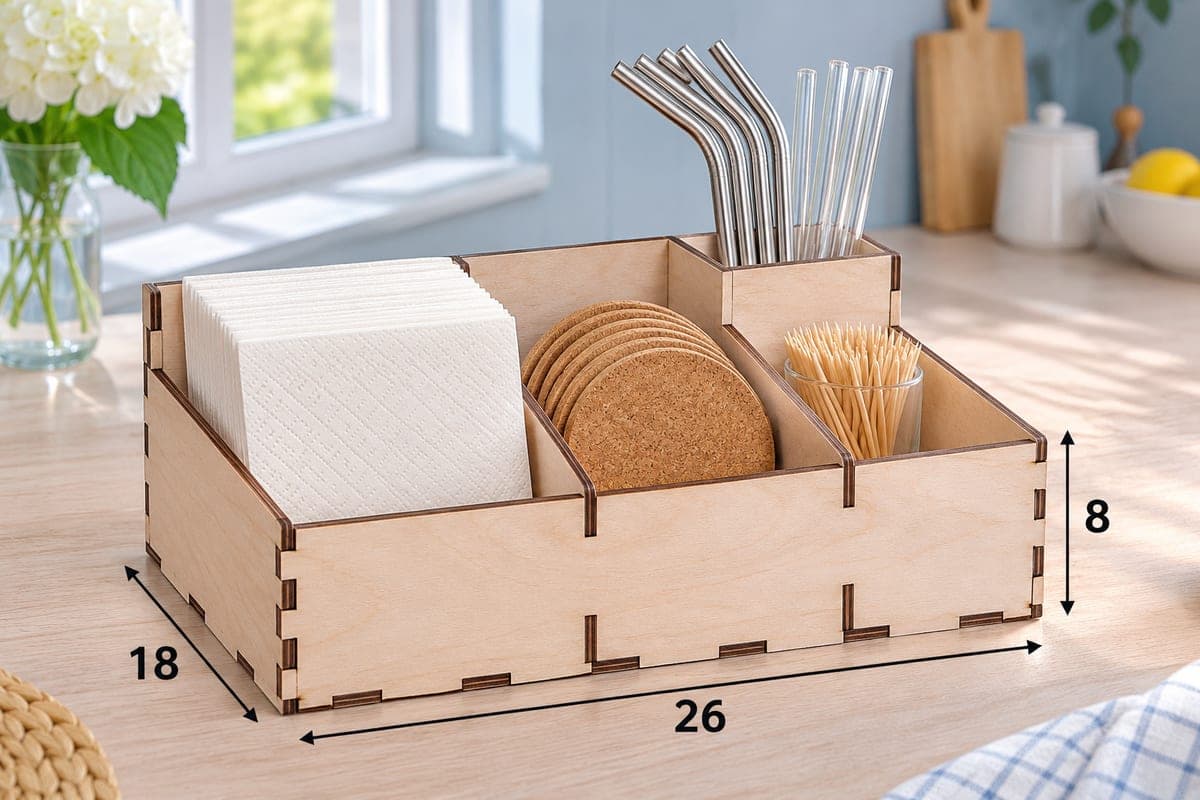
This is the largest box in the oil and sauce range. Three dividers run front to back and one long divider runs the whole 360 mm length, giving eight sections in two rows of four. The photo shows four bottles in the back row (a hot sauce, olive oil, balsamic and a herb-infused oil) and, in front, jars of peppercorns and pink salt, two tiny swing-top oil bottles and a stack of folded linen napkins. Everything a dinner table needs travels in one piece, and the lid closes over it when the meal is done.
The pivot lid
The lid is a single 360 × 176.3 mm panel that turns on plywood pins at the back corners; no metal parts are involved. The side panels are 94.2 mm high, slightly more than the 90 mm back, to hold the pivot. Put the lid between the sides while you assemble, since it cannot be slipped in afterwards, and leave the pins unglued.
Cutting a large layout
For the 3 mm file allow about 34 min 00 s on a 10 W diode, about 14 min 10 s on a 40 W CO2 and about 6 min 48 s on a 100 W CO2. The layout is 1284 × 467 mm, so on a typical hobby laser cut the base and the lid on their own sheets and the walls and dividers on a third. A diode cuts 3 mm in one or two passes; 5 or 6 mm is better done on a CO2.
Restaurants and delis can engrave a logo on the lid and use the chest at a tasting table. As a wedding or housewarming present, fill it with four oils and two salts.
Questions about this file
What fits in the eight sections?
The back row takes four small oil or sauce bottles, and the front row suits spice jars, mini bottles, salt and folded napkins. Bottles taller than about 85 mm will not fit under the closed lid.
Is there any metal in the hinge?
No, the lid pivots on pins cut from the same plywood as the box. That keeps the whole chest laser cut and glue-free at the hinge.
My laser bed is only 400 × 400 mm. Can I still cut it?
Yes, move the parts into three or four smaller groups. The base and lid are each under 400 mm long, so they fit one per sheet.
Can I make it in 6 mm plywood?
The 6 mm files are included and make a very rigid chest, but the inside shrinks and the lid gets heavy. A CO2 laser is the practical choice for that thickness.
How should I finish a chest used at the dinner table?
Sand all edges, then use a food-safe hardwax oil inside and out. It brings out the birch grain and keeps oil drips from soaking in.
Similar files