 Visualization
Cleaning Caddy SVG, Six Section Sink Organizer DXF, Dishcloth and Sponge Holder Laser File, Wooden Kitchen Tray
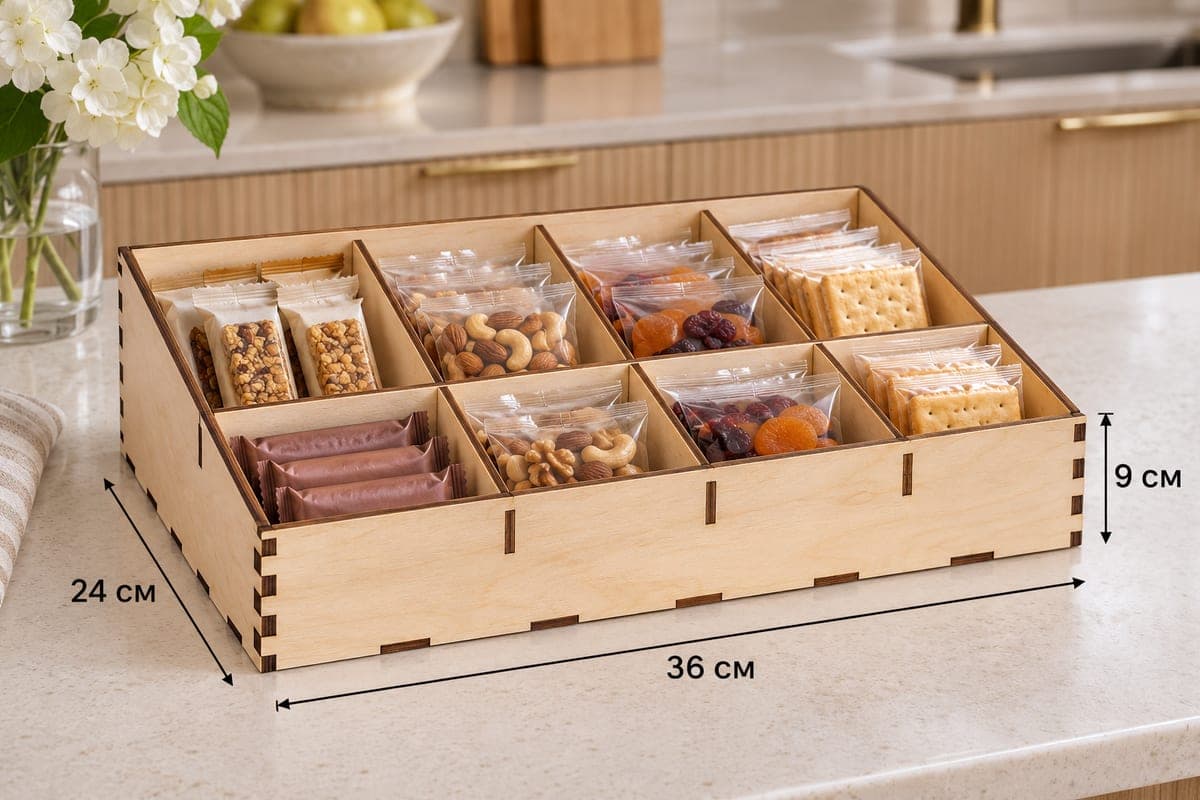
A laser cut file for a six-section cleaning caddy: two rows of three bays behind a sloped front, for dishwasher tablets, sponges, dish soap and dishcloths. It includes SVG and DXF files for 3, 4, 5 and 6 mm plywood, an outer size of 300 × 240 × 90 mm (11.81 × 9.45 × 3.54 in) and 10 pieces that join with tabs and slots. The six-section caddy comes as a free download.
- Formats
- SVG, DXF
- Outer size (W × D × H)
- 300 × 240 × 90 mm (11.81 × 9.45 × 3.54 in)
- Parts
- 10
- Material thickness
- 3, 4, 5 or 6 mm plywood (a file for each)
- Layout size (3 mm file)
- 1,108 × 342 mm
- Cut length
- 7.01 m
- Est. time, 10 W diode (3 mm)
- 23 min 23 s
- Est. time, 40 W CO2 (3 mm)
- 9 min 45 s
- Layers
- CUT only, no engraving
Free account required to download
How to make it
- 01Choose the file for your plywood thickness and cut one slot from scrap to check the tab fit.
- 02Cut the ten parts: front, back, two sloped sides, base, the full-width cross divider, two tall and two low short dividers.
- 03Assemble the outer walls on the base, fit the cross divider, then push the two tall dividers into the back row and the two low ones into the front row.
- 04Sand, seal everything with a waterproof finish, and fill the back bays with tablets, sponges and soap and the front bays with cloths.
Six bays in two rows
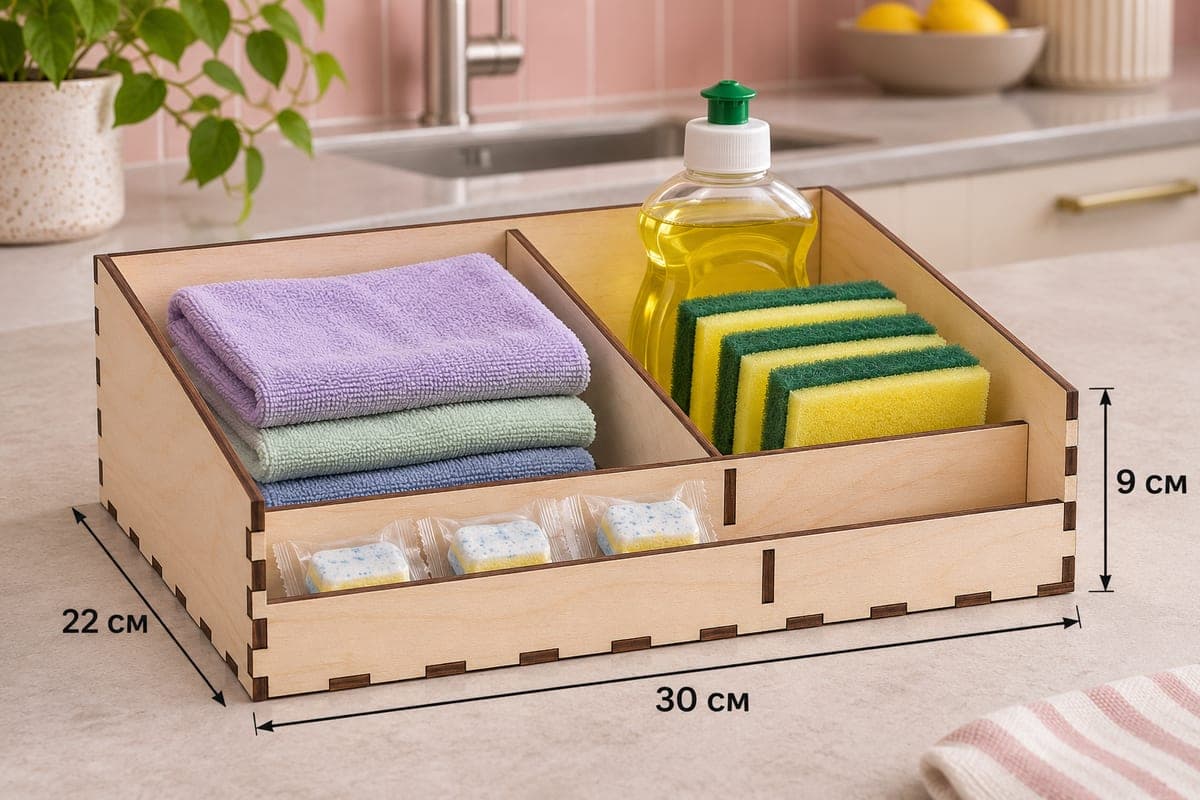
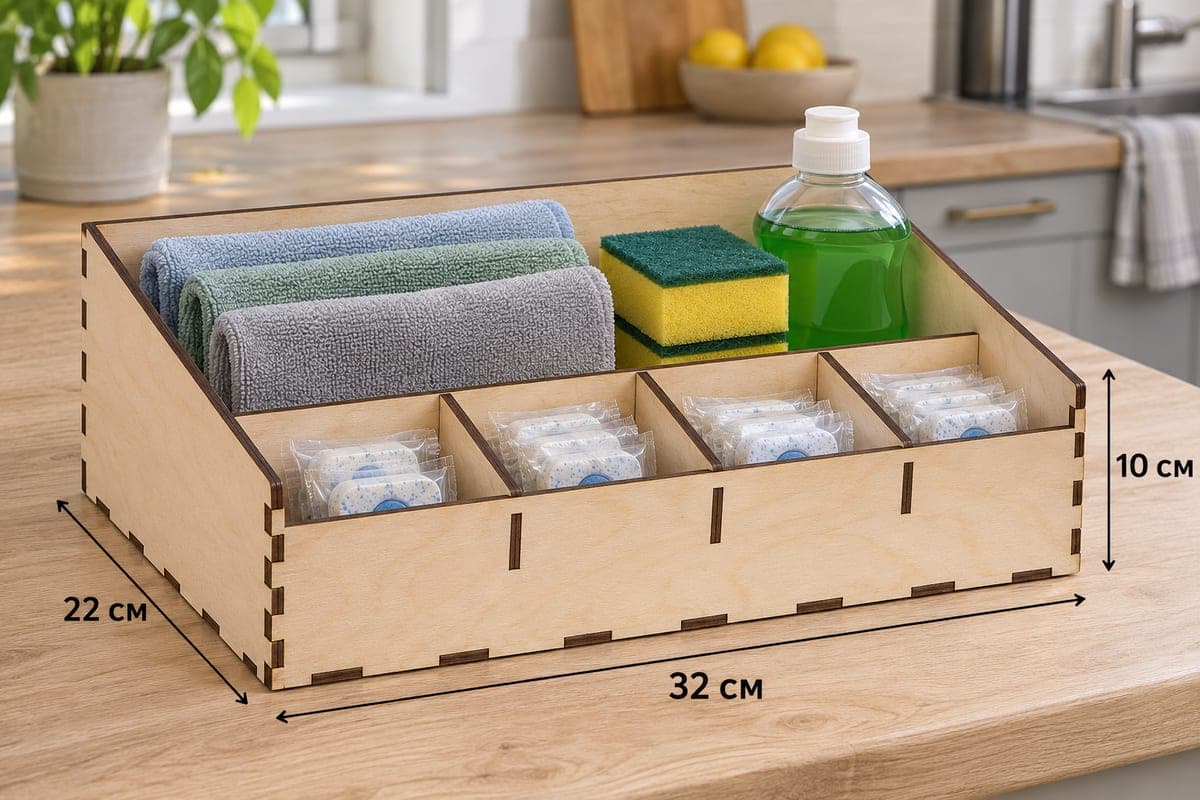
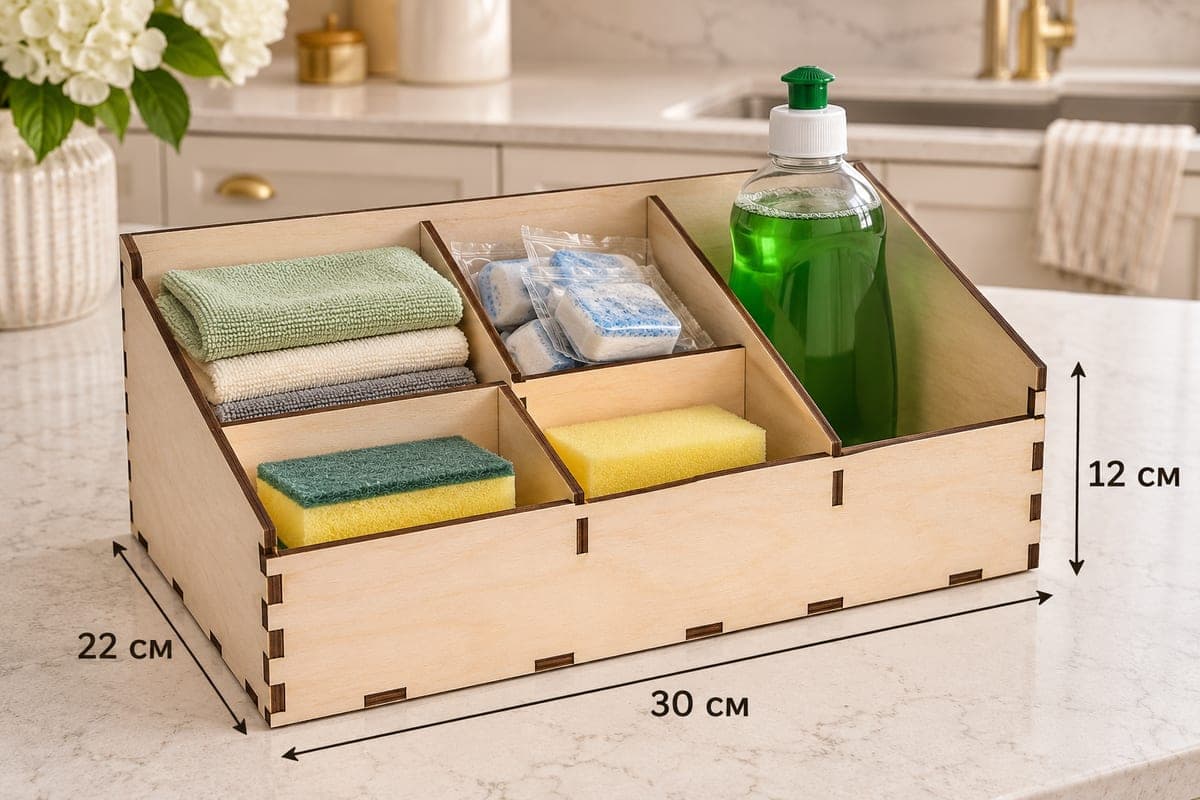
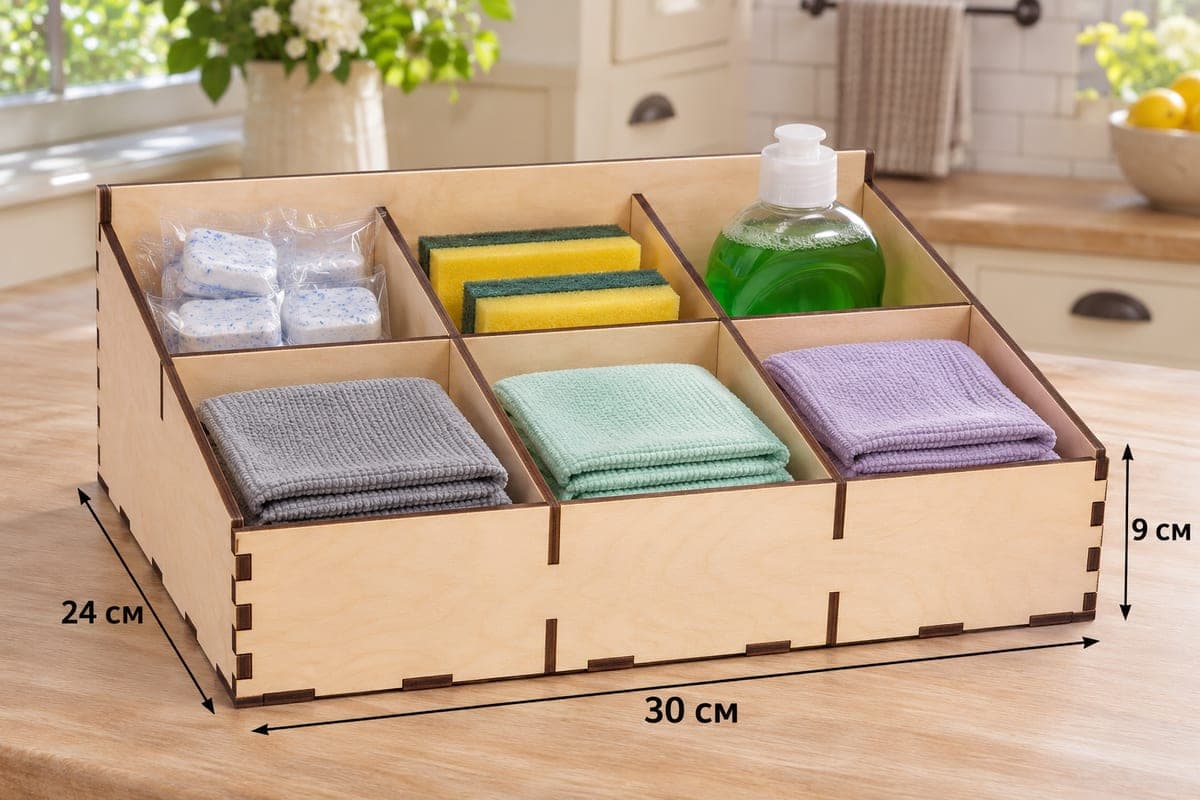
A full-width cross divider splits this caddy into a back row and a front row, and each row is split into three by two short dividers, giving six even bays. The back dividers run the full 90 mm height, while the front ones are lower to follow the slope down to the 45 mm front. In the photo the back row holds dishwasher tablets, two sponges and a pump bottle of dish soap; the front row keeps three folded dishcloths, each in its own color. Sorting cloths this way helps you keep the one for dishes apart from the one for counters.
Cutting and bed size
Ten parts make this one of the busier sink files. For the 3 mm file it takes about 23 min 23 s on a 10 W diode, about 9 min 45 s on a 40 W CO2 and about 4 min 41 s on a 100 W CO2. A diode copes with 3 mm in one or two passes but will crawl through 6 mm, so use CO2 for the thicker versions. The 3 mm layout is 1108 × 342 mm, so most hobby machines will need it split onto two or three sheets.
Make it last at the sink
Sand all edges and seal the box against water with polyurethane or hard wax oil, inside and out. The four short dividers are two pairs of different heights: the taller pair goes in the back row. Glue is optional, though it helps a box this full of small parts stay rigid.
Selling ideas: market it as a cleaning station or a dishcloth organizer, offer a version for laundry or bathroom supplies, or sell it filled with color-coded cloths as a gift.
Questions about this file
Why are there two different short dividers?
The back row is as tall as the back wall, while the front row is lower because of the slope, so its two dividers are shorter. Keep the pairs apart when you sort the parts.
Can I use it for something other than the sink?
Yes, six even bays also suit laundry pods, bathroom cleaning supplies or craft tools.
What finish protects it from water?
Two or three coats of polyurethane, spar varnish or hard wax oil on every face and edge. Let it cure before the first wet sponge goes in.
Would MDF work for this caddy?
MDF is fine for dry uses, but at a sink it swells quickly, so plywood or acrylic is the safer pick.
Can I add labels to the bays?
The file only has cut lines, but you can add small engraved words on the front panel or on the dividers in your laser software.
Similar files